
Preferential equity listings in India reached an unprecedented 1,307 in FY26, marking a 33% increase from the previous year and reflecting a strategic choice for companies during market volatility.

'In investing, poor sentiment is always a good vintage to build a portfolio.'
'India is a big market for StanC, and it is also fastest growing economy in the world.'

Markets regulator Sebi has notified a stricter regulatory framework for small and medium enterprise (SME) IPOs by introducing a profitability requirement and capping a 20 per cent limit on offer-for-sale (OFS). The reforms aim to provide SMEs with a sound track record an opportunity to raise funds from the public while protecting investor interests. This move follows a rise in SME issues, which has driven significant investor participation.

The country's primary capital markets delivered a robust performance in FY26, emerging as a global leader in initial public offerings (IPOs) despite an uncertain environment, the Economic Survey said on Thursday.


Budget 2026 is an intentional and ambitious one - From manufacturing growth to services supremacy, from technology consumption to AI-powered transformation. This is the blueprint for a $7 trillion economy built on intelligence, not just scale.

Budget 2026 sticks to fiscal discipline, shuns populist measures despite five key state elections coming up, but ends up rattling stock markets with a higher transaction tax on derivatives trading.

The surge has come alongside a decline in average issue sizes and more muted listing-day returns compared with last year.

'Many do not have robust business models, and their prospects of survival and long-term growth are poor.'
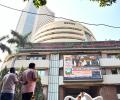
'BSE has facilitated nearly Rs 35 trillion in capital raising across multiple segments.'

Of the total 199 small and medium enterprises (SMEs) listed this year so far, 22 had an issue size of less than Rs 10 crore, which the Securities and Exchange Board of India (Sebi) will no longer allow in the listed ecosystem after its recent consultation paper. The market regulator on Tuesday proposed an overhaul of the rules governing the initial public offerings (IPOs) of SMEs and corporate governance norms for listed SMEs, following concerns over 'systemic risk' seen in the ecosystem with instances of fund diversion and price manipulation.

India's economic growth is expected to be lower at 6.3 per cent this fiscal compared to the RBI's projection of 6.5 per cent, a SBI Research Report said on Thursday. The report pegged the first quarter GDP estimate at around 6.8-7 per cent, mainly due to muted private capex.

Strong performance of past IPOs spurred investors' interest, with 87 small and medium enterprises (SMEs) garnering Rs 1,460 crore through initial share-sales in the first nine months of the year. This was way higher than 56 companies that had raised Rs 783 crore through initial public offering (IPO) in the entire 2021, the industry data showed. Further, the remaining part of the year 2022 can see more mature companies accessing the platform.
In the current calendar year, small and medium enterprises (SMEs) have witnessed an impressive surge in initial public offerings (IPOs), surpassing the 2018 record. Over 150 SME IPOs have been introduced to the market, breaking the previous record of 141 set in 2018. According to data from PRIME Database, a primary market tracking firm, 147 companies successfully concluded their debut share sales by the end of October, raising a cumulative Rs 3,727 crore.

The IPO wave of 2025 is here, and it's bigger than ever. From fintech unicorns to financial powerhouses and infrastructure giants, some of India's biggest names are all set to make their stock market debut. PhonePe, Zepto, Tata Capital, NSE, NSDL, and JSW Cement are just a few of the highly awaited listings that have investors and analysts buzzing with excitement.

Fair trade regulator CCI on Tuesday cleared Bajaj Group's proposed acquisition of a 26 per cent stake each in its insurance joint ventures, Bajaj Allianz General Insurance and Bajaj Allianz Life Insurance, from its partner Allianz SE for a total of Rs 24,180 crore. "The proposed combination involves acquisition of 26 per cent paid-up equity share capital of Bajaj Allianz Life Insurance Company Ltd (BALIC) and Bajaj Allianz General Insurance Company Ltd (BAGIC) by Bajaj Finserv Ltd (BFS), Bajaj Holdings & Investment Ltd (BHIL) and Jamnalal Sons Pvt Ltd (JSPL) from Allianz SE," the regulator said in a release.

Capital markets are becoming more prominent in India's growth story, with an expanding share in capital formation and investment landscape on the back of technology, innovation and digitisation, according to the Economic Survey 2023-24 tabled in Parliament on Monday. Further, Indian markets are resilient to global geo-political and economic shocks, it added. "Despite heightened geo-political risks, rising interest rates and volatile commodity prices, Indian capital markets have been one of the best performing among emerging markets in FY24," the Economic Survey said.

The story of the Bombay Stock Exchange and the people who shaped its growth: From wars and bomb blasts to speculators, reformers and wealth creators.

Fifteen companies have launched their initial public offerings (IPOs) in December 2024, making it the best month for public offerings since 1996. Collectively, they have raised Rs 25,425 crore, which also made December the best month in terms of the quantum of funds raised. In December 1996, 33 companies had raised Rs 931 crore.

Net flows from domestic institutional investors crossed Rs 5 trillion for the first time during a calendar year.

'Focus will be on smaller loan amounts to meet the needs of affordable homebuyers.'
Fundraising momentum is expected to accelerate further in the New Year, potentially surpassing 2024's record figures

The IPO market will be bustling next week, with four companies, including Bajaj Housing Finance, set to launch their initial share-sale to raise a total of Rs 8,390 crore. Besides these four main-board IPOs, nine SMEs are preparing to debut with their maiden public issues next week, targeting to collect Rs 254 crore. Together, these 13 firms are looking to raise Rs 8,644 crore through IPO.

Close to three dozen companies will launch their IPOs over the next four-six months.

The company is also mulling to enter the currency futures space through the exchange. Recently, the Securities and Exchange Board of India had issued guidelines for SME exchange, and had set a minimum net worth criteria of Rs 100 crore (Rs 1 billion) for entity willing to start it.

The Bombay Stock Exchange will start a separate platform for the small and medium-size enterprises by the year-end, a top bourse official said on Wednesday.

The IPO market is set to be bustling next week, with 11 companies like Vishal Mega Mart, TPG Capital-backed Sai Life Sciences and fintech firm One Mobikwik Systems gearing up to launch their initial share sales, collectively aiming to raise nearly Rs 18,500 crore. Other mainboard IPOs to be launched during this period are Inventurus Knowledge Solutions Ltd and Blackstone-owned diamond grading firm International Gemmological Institute (India) Ltd.

Novice investors must understand that volatility is an inherent part of equity markets and learn to navigate through such phases.

Non-resident Indians are investing in well-established small and medium enterprises in India

Much is riding on the role of market intermediaries to get this platform going
Much is riding on the role of market intermediaries to get this platform going

Sebi is examining if speculators and persons acting in concert are behind the huge movements in these stocks

Banks such as IndusInd Bank, Federal Bank, DCB Bank and Axis Bank which have renewed their focus on secured loans may be, hence, walking on a tightrope.
The tide of startup-funding is turning in India, with a rising trend of overall funding while the deal sizes grow bigger. However, the spotlight now is on late-stage startups, many of which are seen to be headed for initial public offerings (IPOs). Record surge in stock markets and consistently improving performances of listed startups are understood to have turned the sentiment for the better, especially for those that exhibit a clear path to an IPO.

The Ministry of Micro, Small and Medium Enterprises (MSME) has received "positive" feedback from industry regarding the 45-day payments cycle for MSMEs, according to a senior official familiar with the matter. The comment assumes significance amid concerns raised by some MSMEs that big companies may stop buying from small and medium suppliers and instead choose to make purchases from unregistered enterprises.
Indian stock markets are expected to be driven mostly by global factors this week amid a lack of local triggers and earnings season largely coming to an end, say analysts. Crude oil prices, rupee movement and US Federal Reserve meeting minutes to be released this week will also influence the market sentiment. "With the earnings season behind us, global cues would largely dictate the trend in the coming week," Ajit Mishra, SVP - technical research, Religare Broking Ltd, said.

Fintech companies believe that the impact of Reserve Bank of India's order last week on unsecured loans will be visible in six to 12 months and prompt them to diversify and strengthen their secured portfolio. Fintechs which source funds through banks or non-banking finance companies (NBFCs) are looking at quickly building their secured portfolio options to at least 40 per cent of their total portfolio. "Over the medium to long term, as part of our product strategy, we are evaluating secured products which can be enabled over a digital platform" said Yogi Sadana, the founder of Zype, a lending-focussed fintech.

Had you invested Rs 10,000 each in JSW Steel, Titan Company and Bajaj Finance 20 years ago, when they were just penny stocks (trading below Rs 10), you would have become a millionaire by now.
 © 2026 Rediff.com - Advertise with us - Disclaimer - Privacy Policy - Sitemap - Feedback - About us - Terms of use - Grievances